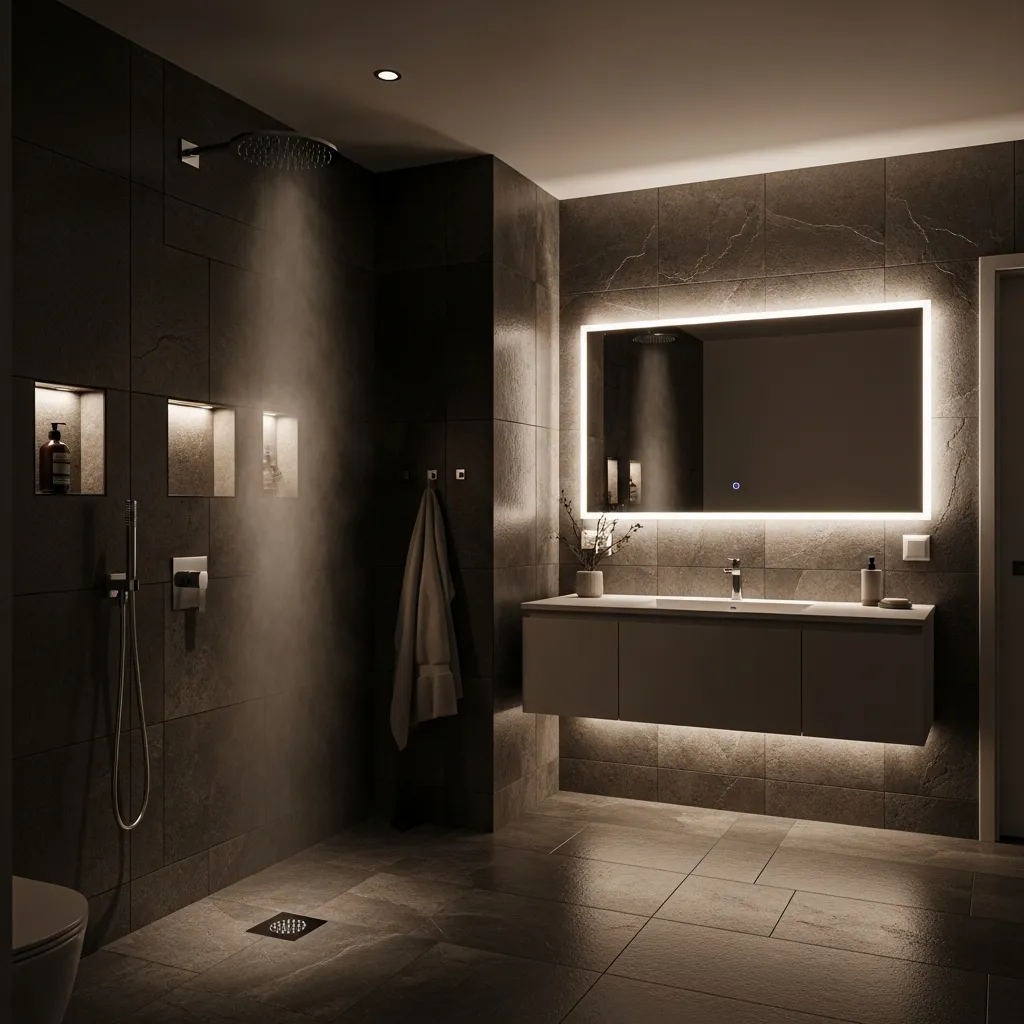
Lighting Zones & IP Ratings: How to Safely Light a Luxury Bathroom According to UK Regulations
A stunning bathroom lighting scheme counts for very little — and may truly be dangerous — if it doesn’t meet UK electrical safety regulations for wet environments. Bathrooms are divided into specific electrical zones, each with strict rules about what fittings are actually allowed where, and getting this wrong isn’t just a compliance issue; it’s a real safety one. This guide explains the zone system, what IP ratings actually mean, and how to design a genuinely luxurious scheme that stays firmly within the rules.
Understanding Bathroom Electrical Zones
Zone 0
Inside the bath or shower itself. The strictest zone by far, since it’s an area that comes into direct contact with water.
Zone 1
Directly above the bath or shower, up to 2.25m height. Still a high-risk area requiring properly rated fittings.
Zone 2
The area extending 0.6m beyond the bath or shower, and around basins too. A slightly less restrictive zone, but still one requiring water-resistant fittings.
Outside Zones
The rest of the room, beyond zones 0-2. More design flexibility here, though general electrical safety requirements still apply throughout.
What IP Ratings Actually Mean
An IP rating is a two-digit code — the first digit covers protection against solid particles, the second against liquid. In a bathroom context, it’s really the second digit that matters most.
Each zone has a minimum IP rating requirement, and higher-rated fittings are generally safer, though not always necessary outside the wet zones themselves. There’s no need to over-specify a fitting in an area where the risk is genuinely lower.
Choosing Fittings for Each Zone
Zone 0/1
Fully sealed, high IP-rated fittings only — think recessed shower lights specifically designed and certified for this level of water exposure.
Zone 2
IP44 as a working minimum, covering basin and vanity lighting where splashing is a realistic possibility although direct water contact is less likely.
Outside Zones
More flexibility on fitting choice here, though a damp-rated fitting is still generally the sensible option in a room that’s inherently humid, regardless of zone.
Designing a Luxury Lighting Scheme Within These Rules
None of this needs to compromise on genuinely good design. Layering task, ambient, and accent lighting still works perfectly well within the zone constraints — it just requires choosing the right fitting for each specific location rather than the same fitting throughout. Statement pieces like pendants or chandeliers are entirely possible, provided they’re positioned in zones that actually permit them, and dimmers or smart controls can be used safely too, provided the switching mechanism itself is appropriately rated and positioned outside the wet zones.
Working with a Qualified Electrician
Bathroom electrical work is notifiable under Part P, meaning it needs to be carried out and certified by someone properly qualified, not just competent with a screwdriver. A compliant installation should come with a proper certificate confirming the work meets regulations. Non-compliant lighting isn’t just a safety risk — it can also cause genuine problems at resale, or with insurance, if it’s ever discovered that the electrical work wasn’t done to standard.
Bringing All Things
Safe, code-compliant bathroom lighting and genuinely luxurious design aren’t in conflict with each other — they need proper planning around the zone system from the start, rather than being treated as separate concerns. Get a qualified electrician involved early, and there’s no reason a beautifully lit bathroom can’t also be fully compliant.
If you’re planning a bathroom lighting scheme and want it designed safely and beautifully from the outset, get in touch for a consultation.
