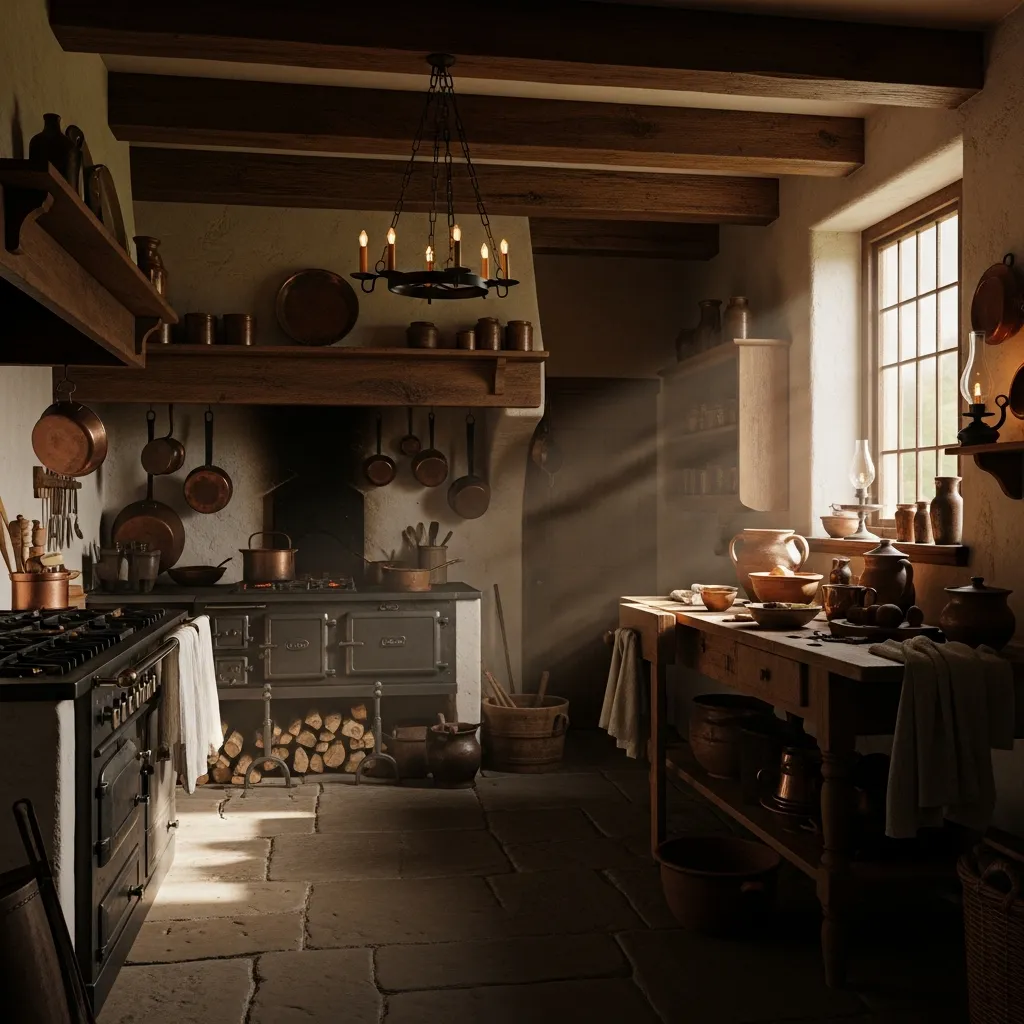
Choosing the Right Lighting for a Period Kitchen: The Ultimate 2026 Guide
High Victorian ceilings and original cornicing are stunning architectural features — but they present a unique challenge. How do you light a period kitchen without ruining its historic appeal? Get it wrong, and you’re left with a cavernous, shadowy room or one so brightly lit it feels more like a hospital than a home.
I see this constantly in London period property renovations. The kitchen has to work incredibly hard these days. It’s a high-tech prep zone, a dining space, and a social hub, often all at once, and it needs to do all of this while respecting a building’s heritage. A beautifully restored Victorian terrace with original plasterwork and a soaring ceiling deserves lighting that celebrates those features, not fights against them.
The secret? Multi-layered lighting. Rather than relying on a single central pendant to do all the work, successful period kitchens combine three distinct types of light — task, ambient, and accent — to create a space that’s practical, warm, and genuinely inviting. Let’s break down how to achieve this in your own home.
The Challenge of High Victorian Ceilings
Before exploring fixtures, it is worth understanding why so many period kitchens get lighting wrong in the first place: the scale, the architecture, and the requirement to balance both.
The Scale Issue
Standard lighting solutions simply fail in Victorian properties. A single central pendant, perfectly adequate for a modern 2.4m ceiling, gets dominated by a room with 3.5m or 4m ceilings. Corners fall into shade, worktops go unlit, and the room feels cold and uninviting despite its beautiful proportions.
Go the other direction and install rows of recessed spotlights, and you run into a different problem entirely — they look jarringly modern and clinical against original coving and plaster detail. It’s the lighting equivalent of putting a glass extension on the front of a listed building. Technically functional, aesthetically wrong.
Respecting Architecture
Any electrical layout in a period kitchen needs to be planned around what’s already there, not the other way round. Original plasterwork, ceiling roses, and cornicing are increasingly rare and genuinely add value to a property — they shouldn’t be damaged, boxed in, or ignored when running new cabling. A good electrician or lighting designer will work with these features, routing cables discreetly and using existing ceiling roses as anchor points wherever possible.
Scaling Up
The single biggest mistake I see is under-scaled lighting. If you’ve got a grand, high-ceilinged room, your fixtures have to match that scale. Oversized or elongated pendants, generously proportioned chandeliers, and statement fittings all read correctly in these spaces. A dainty little pendant that would suit a 1990s new-build simply gets lost, visually and functionally, in a genuine Victorian kitchen.
Task Lighting: Brightening the Work Zones
Task lighting is the bright, focused light you need to safely chop vegetables, read recipes, and clean up. It’s unglamorous but absolutely essential — no amount of atmospheric ambient lighting will help you avoid slicing your finger while prepping dinner.
Kitchen Island Pendants
If your period kitchen has an island, this is where a statement pendant genuinely earns its keep. Dropped from the high ceiling on a long flex or rod, a carefully selected pendant does double duty: it throws focused light exactly where you’re working, and it acts as a visual anchor that draws the eye and fills the vertical space above the island. Clusters of three pendants, or a single oversized fixture, both work well depending on the island’s proportions.
Under-Cabinet Solutions
For worktop lighting along the walls, discreet LED strips hidden under wall cabinets or open shelving are the answer. They light up the surface exactly where you’re chopping and cooking, without introducing any visible modern hardware that would clash with the period aesthetic. This is one of the few places where genuinely contemporary technology can be used freely, because it stays completely out of sight.
Directional Spotlights
Over the sink or the cooker, directional wall-mounted spotlights in brass or antique bronze give you targeted task lighting while still looking entirely appropriate to the property's era. These read as traditional fittings rather than modern intrusions, and the adjustable heads let you angle the light exactly where it’s needed.
Ambient Lighting: Setting the Overall Mood
If task lighting handles function, ambient lighting handles feeling. This is your foundational base layer — the light that replaces natural daylight and ensures the whole room feels evenly lit and welcoming, rather than a series of bright spots surrounded by shadow.
The Central Chandelier
A striking central chandelier, or a generous multi-arm pendant, dropped from an original ceiling rose is the classic solution here — and for good reason. It casts a warm, diffuse light across the whole room rather than a single hard-edged pool of light, and it makes genuine use of period features that would otherwise go unused.
Wall Sconces
Don’t underestimate wall lights. In a period kitchen, sconces bounce light off the walls and up towards those high ceilings, creating a much softer, more atmospheric glow than anything coming from directly overhead. They’re especially effective in kitchens with dining or seating areas, where you want warmth rather than functional brightness.
Dimmer Switches
This one is not open to negotiation. Every piece of background lighting in a period kitchen should be on a dimmer. The room needs to transition from a bright, functional prep space at 7am to an intimate dining setting by 8pm, and that’s simply not possible without dimming control. It’s a small addition at the first-fix stage that transforms how usable the room feels day-to-day.
Accent Lighting: Highlighting Period Features
Accent lighting is where you add genuine depth, drama, and dimension. Rather than lighting a task or the whole room, it draws the eye deliberately to specific architectural or design features — the details that make a period kitchen worth restoring in the first place.
Highlighting Architecture
Discreet uplighters or LED strips can wash light over original Victorian cornicing or exposed brickwork, throwing the detail of the plasterwork or masonry into relief once the sun goes down. It’s a subtle effect, but it makes an enormous difference to how the room feels in the evening.
Illuminating Cabinetry
Inside glass-fronted dresser cabinets or bespoke pantry cupboards, warm, low-wattage lighting beautifully showcases glassware and ceramics. It also adds another subtle light source to the room without requiring another switch on the wall — most of these are on sensors or simple internal wiring.
Creating “Zones”
In a large, open-plan period kitchen — increasingly common as Londoners knock through to create kitchen-diners — accent lighting is one of the best tools for zoning the space. A change in lighting character between the cooking area and the dining or seating area helps the room read as two distinct spaces, even without any physical division.
Choosing the Right Finishes for a Period Property
The technical layout is only half the job. The finishes you choose will make or break the overall effect.
Period-Appropriate Metals
Steer towards finishes that actually complement Victorian architecture: unlacquered brass (which develops a beautiful patina over time), antique bronze, and blackened iron all sit comfortably in these spaces. Unlacquered brass, in particular, has become the usual choice for London-period renovations, precisely because it ages naturally rather than remaining artificially shiny.
Glass Options
Ribbed, fluted, or seeded glass shades diffuse light elegantly and bring a softer, more vintage character than clear modern glass. They also do a useful practical job of softening the visible bulb, which matters more than people expect once the fitting is actually turned on.
Avoiding Anachronisms
Two things will undo a carefully planned scheme faster than anything else: ultra-modern shiny chrome fittings and cool-white LED bulbs. Chrome reads as distinctly contemporary against period features, and cool-white light (anything above roughly 3000K) gives the whole room a clinical, slightly unwelcoming cast. Stick to warm white bulbs around 2700K, and you’ll maintain the historic integrity of the space while still benefiting from modern LED efficiency.
Bringing Everything Together
Successfully lighting a period kitchen with high Victorian ceilings comes down to one core strategy: a considered combination of task, ambient, and decorative lighting, rather than relying on any single source to do everything. That balance is what protects the room’s character while making it work properly.
Get the layering right, and you end up with a kitchen that really improves the property's historic architecture while still functioning as a modern, high-performing family space. It is one of those details that is easy to overlook during a renovation, but it makes a disproportionate difference to how the finished room feels to live in.
Before the first cable is laid, it’s worth sitting down with a specialist lighting designer or your renovation team to properly plan the full scheme. Retrofitting good lighting after the plaster is dry is far more disruptive — and expensive — than getting the layout right from the start.
