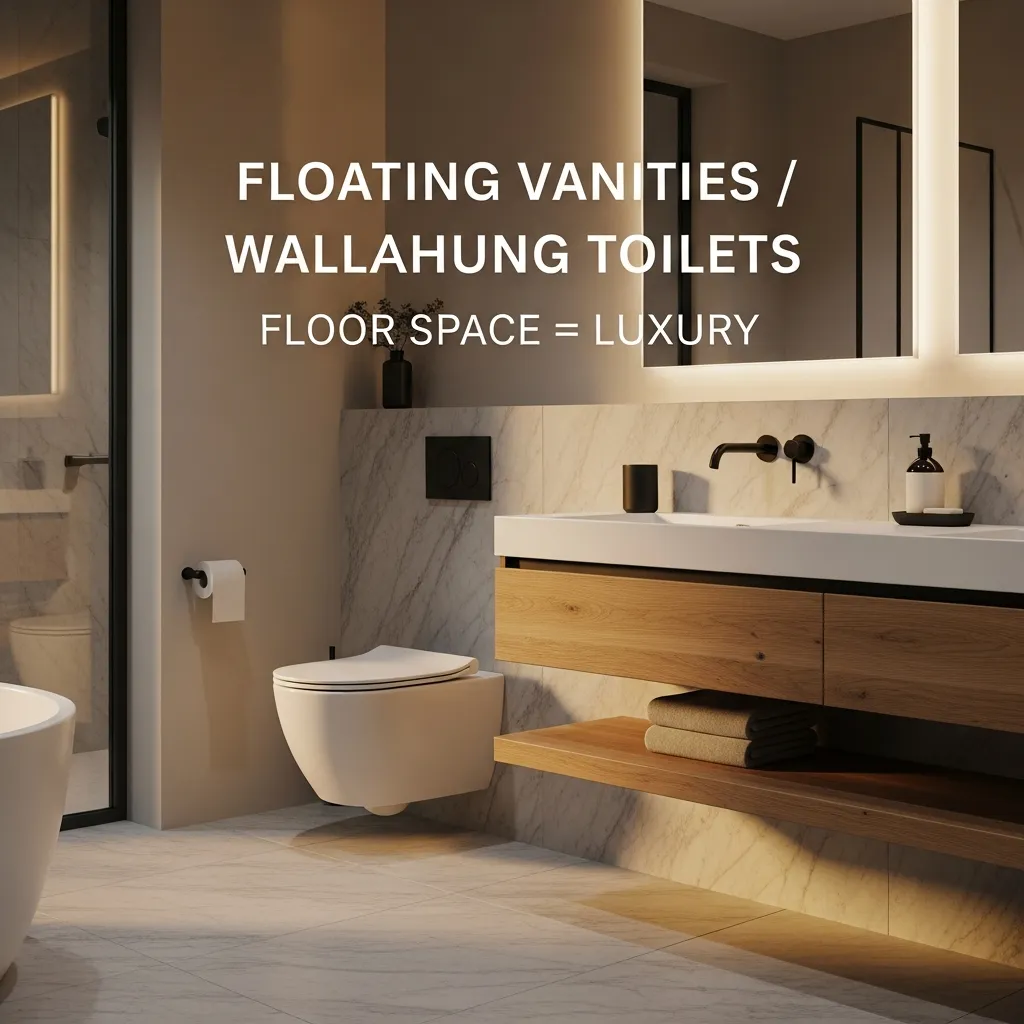
Floating Vanities & Wall-Hung Toilets: Why Floor Space Is the Secret to Luxury
In a small London bathroom, the floor is your most valuable asset. The more floor you can see, the bigger the room feels. It’s a simple idea, but it’s easy to miss when planning a bathroom renovation. This is the main reason floating vanities and wall-hung toilets have become so popular.
These fixtures aren’t just for modern apartments or new builds anymore. More people are adding them to Victorian and Edwardian homes, giving a fresh, modern touch to classic spaces. This guide will show why raising fixtures off the floor changes how a room feels, the real benefits of wall-hung toilets, and how to pick the right floating vanity for your bathroom.
The Visual Illusion of Space
The “Dead Zone” Effect
When a vanity or toilet is attached to the floor, it creates a visual “dead zone.” Your eye stops at the base of the unit instead of seeing all the way to the wall behind it. Even though the floor goes further, your mind sees that spot as the end of the usable space.
How the Eye Reads a Room
This matters because we judge a room’s size more by clear sightlines than by its actual measurements. If every fixture breaks up the view, the room feels like a bunch of small areas instead of one open space. Spaces broken up like this always feel smaller than they really are.
Lifting Fixtures Off the Floor
When you raise the vanity and toilet off the floor, the dead zone goes away. Your eyes can follow the floor all the way to the wall, with the flooring running under the fixtures instead of stopping at their base. The floor space hasn’t actually changed, but the room feels much bigger.
The 20% Effect
This simple change can make a narrow bathroom feel up to 20% larger, just by changing how it looks, not by changing the structure. In a small London bathroom, that’s a big improvement without moving any walls.
The Benefits of Wall-Hung Toilets
Hiding the Cistern
A wall-hung toilet hides the bulky cistern behind a stud wall, instead of keeping it in a unit right behind the pan. This looks much sleeker, but the benefits go beyond just appearance.
Depth Savings
Hiding the cistern saves about 10 to 15 cm of depth compared to a traditional toilet. In a small ensuite, that extra space can make the room feel much more comfortable instead of cramped.
Ease of Cleaning
Since the pan is attached to the wall and not the floor, you can easily mop underneath it. This gets rid of the hard-to-clean corners around a floor-standing toilet, which often collect dust and grime no matter how often you clean.
Adjustable Height
Because the pan is mounted on a frame instead of the floor, you can set the height exactly how you want during installation. This isn’t possible with a standard toilet and can make a real difference in everyday comfort.
Practical Points
To install a wall-hung toilet, you need to build a stud wall for the hidden cistern and mounting frame, plus an access panel for maintenance. Usually, this is a flush plate that lets you reach the cistern if needed. It’s best to plan this early, because adding a wall-hung toilet to an existing solid wall is much harder than including it from the start.
Choosing the Right Floating Vanity
Storage Without Visual Weight
A floating vanity gives you useful storage for towels, toiletries, and other essentials, but without the bulky look of a cupboard sitting on the floor. Like a wall-hung toilet, it offers function without making the room feel crowded.
Bespoke Options
Victorian bathrooms often have tricky alcoves, like spaces beside a chimney or odd corners from partition walls, where standard vanity units don’t fit well. A custom floating vanity made for these spots uses space that would otherwise go to waste or be filled with a poorly fitting unit.
Integrated Lighting
Adding an LED strip under a floating vanity makes it look like it’s really floating above the floor. It also works as a gentle night-light, which is handy if you need to use the bathroom at night without turning on the main lights.
Material and Finish Considerations
In a period bathroom, floating vanities look great in warm wood tones or painted finishes that match traditional cabinets. This helps the modern style fit in with original features. For a more modern look, matte lacquer or stone finishes make the floating design feel even sleeker and more minimal.
Storage Capacity Trade-Offs
Keep in mind that a floating vanity, especially a slim one made to boost the floor-space effect, usually has a bit less storage than a floor-standing unit of the same width. This isn’t usually a big issue, but if you need lots of storage, plan for it. Good drawer organization and smart use of depth can make up most of the difference.
Installing Wall-Hung Fixtures in a Period Property
Structural Requirements
Wall-hung fixtures need either a special stud wall for the hidden cistern and frame, or, for a floating vanity, a strong wall bracket that can hold the unit and its contents. These aren’t very complicated, but they should be planned before you finish the walls, not after.
Assessing Existing Wall Structure
Before choosing any wall-hung fixture, check the existing wall. Solid masonry walls usually need extra brackets to safely hold a mounted vanity. A stud wall might already work for a hidden cistern frame, or it might need some extra support, depending on how it’s built.
Coordinating Plumbing Routes
Wall-hung units still need proper plumbing to reach the fixture. For a wall-hung toilet, you also need an easy way to connect to the waste system through the frame. This should be planned along with the rest of your bathroom plumbing.
Working Within Period Proportions
The best results in Victorian and Edwardian homes come from working with the room’s original shape and features, like fitting a custom floating vanity into an old alcove, instead of treating the space as empty. This helps modern fixtures look right at home in a period setting.
Floating Fixtures as Part of a Wider Small Bathroom Strategy
Floating vanities and wall-hung toilets work best as part of a bigger small-bathroom design plan. When you add large tiles, frameless glass showers, and layered lighting, the effect is even stronger. Each part helps create an open, clear view across the room.
That’s why wall-hung fixtures are a key choice and should be decided early in your design, not added at the last minute. They work well in many types of bathrooms, from small ensuites to family bathrooms or cloakrooms where every bit of space counts.
Bringing Everything Together
Floating vanities and wall-hung toilets can truly change how a small London bathroom feels. The floor area stays the same, but the clear sightlines make a big difference. With easier cleaning, adjustable height, and custom storage, these fixtures are one of the best ways to improve both classic and modern bathrooms.
If you’re planning a small bathroom renovation and want to learn more about custom floating vanities or wall-hung fixtures for your home, contact us for a personalized consultation.
