Freestanding Baths for Period Homes: Choosing the Right Style for a Victorian Main Suite
The freestanding bath is the one fixture that really anchors a luxury master suite. Get it right, and it becomes the room’s centrepiece; get it wrong, and even a beautifully finished bathroom can feel like it’s missing something. Choosing the right one matters more than any other single fixture decision you’ll make in the room.
Period properties bring a genuine mix of advantage and challenge here. Generous room proportions and high ceilings suit a freestanding bath beautifully — but structural loading and plumbing routes need proper thought in a way a new-build doesn’t face. This guide covers the styles worth considering, material choice, positioning, and the practical side of getting a freestanding bath into an older home.
Why a Freestanding Bath Suits a Period Master Suite
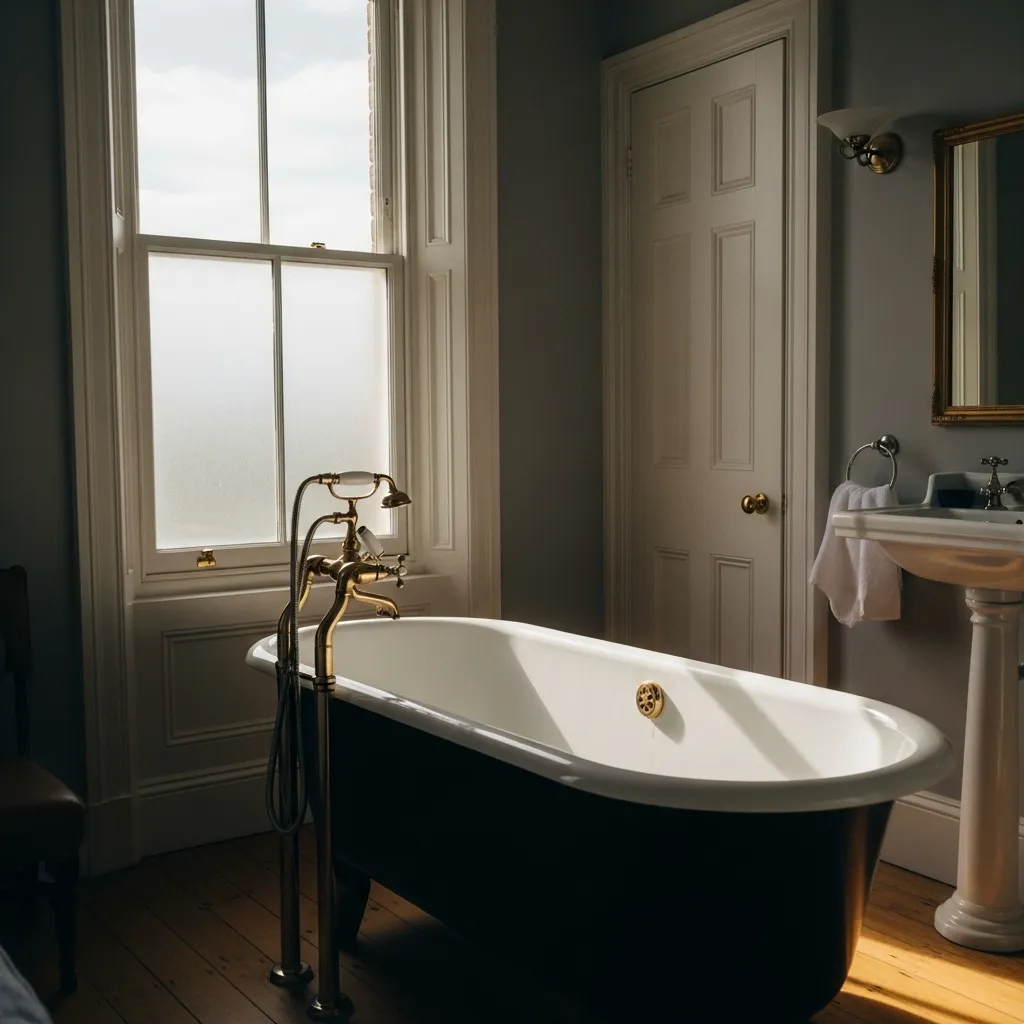
A freestanding bath anchors a room in a way a built-in bath simply can’t — it becomes a real piece of furniture rather than a fixture tucked against a wall. There’s also a direct historical thread here: the roll-top bath is a genuinely Victorian design, so a freestanding bath in a period property isn’t borrowing a trend; it’s returning to the room’s original character.
Victorian master bedrooms and ensuites tend to be generously proportioned, which suits a freestanding bath’s need for a bit of breathing room around it far better than a cramped modern bathroom would.
Choosing a Style — Classic vs Contemporary Freestanding Baths
Traditional roll-top and slipper bath silhouettes are the most obviously period-appropriate choice, with their curved, classic profile. Contemporary sculptural freestanding baths — sleeker, more geometric — can also work well within a period shell, provided the rest of the room supports that contrast deliberately.
This really comes down to which broader design approach you’re taking: a “contrast” scheme (period shell, modern fittings) suits a sculptural contemporary bath; a “sympathetic” scheme suits a genuine roll-top or slipper style.
Material Choice — Cast Iron, Acrylic, Stone Resin
Cast Iron
Genuinely authentic, with excellent heat retention, but heavy — worth factoring into structural planning, particularly on an upper floor.
Acrylic
Lighter, more affordable, and available in a wider range of contemporary shapes — a sensible option where budget or floor loading are genuine concerns.
Stone Resin/Composite
A premium contemporary option that feels substantial without cast iron’s full weight — a good middle ground for a more modern silhouette.
Maintenance-wise, cast iron holds up beautifully long-term provided the enamel’s looked after, acrylic can scratch more easily but is simple to keep clean, and stone resin sits somewhere in between.
Positioning the Bath Within the Room
Structural Loading
Particularly with cast iron, floor loading needs proper checking — this matters most on upper floors in older properties, where joists may need assessment.
Plumbing Routes
Freestanding baths typically use either a floor-mounted filler, positioned at the plumbing route, or a wall-mounted option — this needs deciding early since it directly affects where the bath can actually sit.
Using It as a Visual Anchor
The best freestanding bath positions work with the room’s existing features — angled toward a window, positioned relative to an original fireplace — rather than being placed purely for plumbing convenience.
Tap and Filler Options for Freestanding Baths
Floor-mounted fillers give the cleanest, most classic freestanding look. Wall-mounted options work well where floor space or plumbing routing is more limited. Whichever you choose, it’s worth coordinating the filler’s finish to the room’s wider heritage brassware scheme rather than treating it as an isolated decision.
Bringing Everything Together
Choosing the right freestanding bath comes down to coordinating style and material to your property’s period and proportions, while planning properly for the structural and plumbing requirements that come with it. Get that right, and it becomes exactly the centrepiece a genuine main suite deserves.
If you’re planning a main suite renovation and want help selecting and positioning a freestanding bath, get in touch for a tailored consultation.
