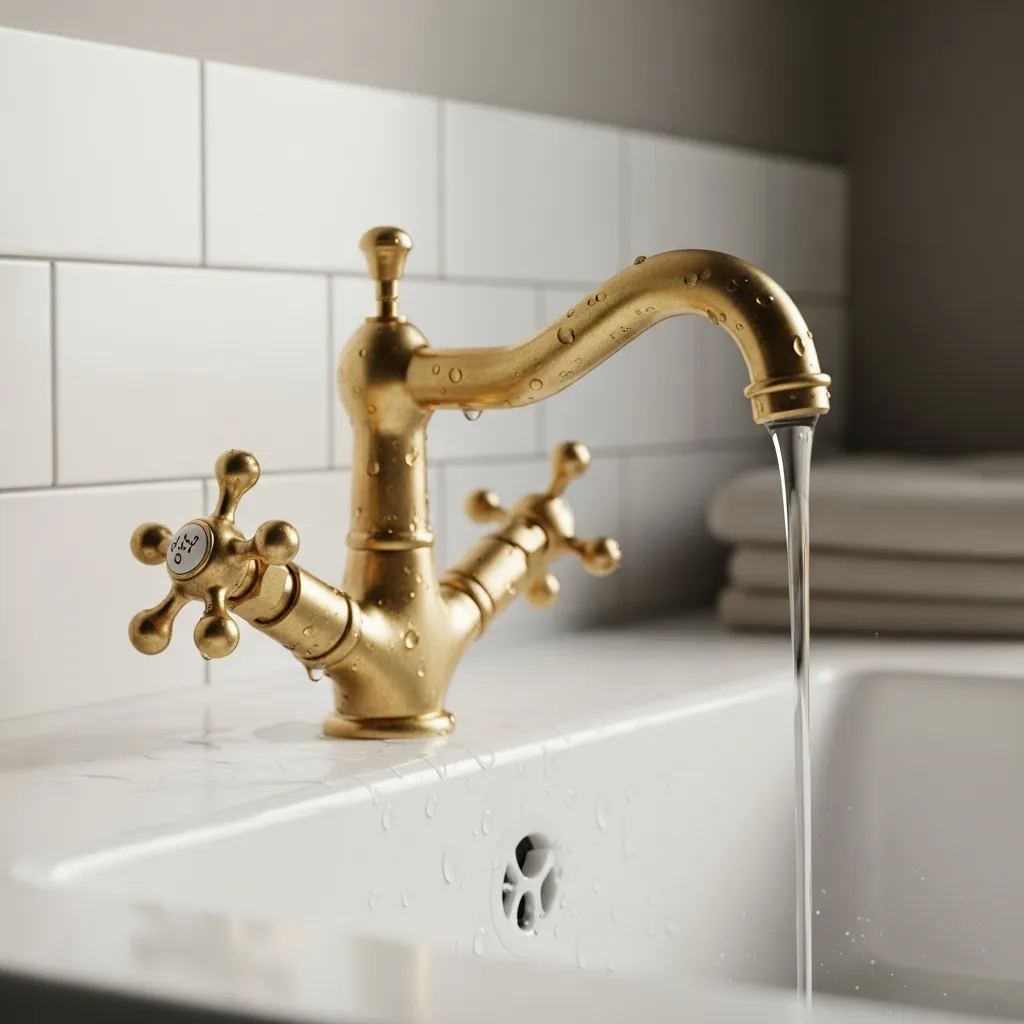
Heritage Bathroom Taps and Brassware: What to Look for Before You Buy
Taps don’t take up much space in a bathroom, but they do a lot of the talking. Walk into a beautifully restored Victorian bathroom, and it’s often the brassware that catches your eye first — the shape of the handles, the way the light catches unlacquered brass, the sound the mechanism makes when you turn it: small fittings, disproportionate impact.
The trouble is, “heritage brassware” now covers an enormous range of products, from genuine Victorian originals dug out of a salvage yard to cheap modern taps with a vaguely old-fashioned handle bolted on. The quality gap between these is huge, and it’s not always obvious from a photo online. This guide should help you tell the difference — covering the main tap styles, what the different finishes actually mean, how to judge build quality, and what to think about before you buy.
What Counts as “Heritage” Brassware?
In practice, “heritage” tends to mean a traditional design language instead of a strict guarantee of age. A tap can be brand new and still count as heritage, provided it follows the visual conventions of the period — cross-head handles, visible pipework rather than everything hidden behind the wall, and lever or knob shapes which mirror Victorian or Edwardian originals.
That’s a useful distinction to keep in mind, because “heritage” and “traditional-style” get used almost interchangeably by retailers, and not every product marketed this way is built to the same standard. Some genuinely replicate the internals as well as the looks; others are essentially modern taps wearing a costume.
Whichever route you take, it’s worth knowing that brassware punches well above its size when it comes to how authentic a bathroom feels. Get the taps wrong, and even a beautifully restored roll-top bath or original tiled floor can end up looking slightly off.
Classic Heritage Tap Styles
Cross-Head Taps
This is the design most people picture when they think “Victorian tap” — a four-pointed handle you turn like a valve wheel. It’s simple, robust, and about as period-authentic as brassware gets.
Lever Taps
Levers came along a little later, into the Edwardian period, offering an alternative to the cross-head that’s arguably easier to operate with wet or soapy hands. If your property is more Edwardian than Victorian, levers can be the better historical match.
Pillar Taps
Pillar taps are separate hot and cold taps rather than a single mixer — exactly how most Victorian bathrooms were originally plumbed. They’re a good fit where you want strict authenticity, though most households today find a mixer more convenient day-to-day.
Bridge Mixers
The bridge mixer is probably the most recognisable heritage mixer tap around: two handles connected by a visible, curved bridge of pipework above the basin. It gives you the convenience of a mixer with the look of exposed period plumbing.
Aligning Style to Era
None of these choices is strictly “right” — it really comes down to your property. A strict Victorian restoration probably prefers cross-head or pillar taps; an Edwardian one has a bit more room for lever designs; and a looser “modern-Victorian” scheme can mix and match more freely, provided the overall look stays cohesive.
Understanding Finishes
Unlacquered Brass
This has become the primary choice for many London period renovations, and for good reason. Left unlacquered, brass develops a genuine patina over time — it darkens, marks slightly, and starts to look like it’s actually been used, rather than staying artificially shiny forever. Some people love that. Others find it needs more thought than they expected, since it will change colour with use and cleaning habits.
Chrome
Chrome is the practical option. It’s easy to clean, doesn’t tarnish, and reads as reasonably period-neutral — not strictly Victorian, but not obviously modern either. It works well where you want heritage styling without unlacquered brass’s ongoing character.
Nickel
Nickel sits between the two: warmer than chrome, but without the patina brass develops. It has a genuinely long pedigree in period bathrooms and tends to suit properties where you want something that looks established from day one, rather than something that ages into character.
Aged or Antiqued Bronze
These finishes are pre-treated to look like they’ve already developed decades of patina, which some people prefer if they don’t want to wait, or don’t want the finish to keep changing over time.
Fitting the Rest of the Room
Whatever finish you pick for the taps, it’s worth carrying through to handles, towel rails, and any other exposed hardware in the room. Mixing finishes can work if it’s deliberate, but an accidental clash between the taps and everything else tends to stand out more than people expect.
Material Quality — What Separates Good From Poor Brassware
Solid Brass vs Brass-Plated
This is the single biggest quality divide in the market. Genuine solid brass taps are made from brass throughout; cheaper alternatives are often a base metal — usually zinc alloy — with a thin brass plating over the top. The plated versions look fine on day one, but the coating wears, chips, or tarnishes far faster than solid brass ever would.
Weight as a Quality Signal
There’s a reason plumbers and designers talk about “picking up the tap” before buying. Solid brass has a real, noticeable heft. If a tap feels suspiciously light for its size, that’s usually plating rather than solid metal.
What’s Happening Inside
The visible brass is only half the story — what’s inside the tap matters just as much. Modern ceramic disc valves give a smoother, more reliable action and rarely need maintenance. Older-style rubber washer mechanisms are more traditional, but need replacing periodically as they wear.
Spotting a Poor Reproduction
A few tell-tale signs: handles that feel loose or wobbly, a mechanism that’s stiff or gritty to turn, visible seams or joins that shouldn’t be there, and plating that already looks thin or patchy in the shop. None of these should be present in a tap you’re paying a genuine heritage price for.
Modern Performance Within Traditional Design
It’s a common worry — that choosing a period-look tap means putting up with poor water pressure or an unreliable mixer. In practice, that’s rarely true anymore.
Balancing Looks and Pressure
Most reputable heritage tap manufacturers now build genuinely modern internals into a traditionally styled exterior, so you get period looks without sacrificing everyday performance.
Thermostatic and Anti-Scald Features
Even traditional-style shower mixers can now include thermostatic control and anti-scald protection, hidden discreetly within a period-appropriate casing — useful if there are children or elderly family members in the house.
Water Efficiency
Flow restrictors and aerators can also be built into heritage-style taps without changing their appearance, letting you fulfil modern water efficiency expectations while keeping the period look intact.
Sourcing Genuine Antique vs Reproduction Brassware
Where to Find the Real Thing
Genuine antique taps turn up at reclamation yards and through specialist period sanitaryware dealers. It’s a genuinely rewarding way to source fittings, though it takes more patience than ordering online.
What to Check Before Buying Antique
Look closely at how worn the mechanism is, how much of the original one plating (if any) has been lost, and whether the thread and fitting size will actually match modern pipework — a common issue with older pieces.
Reproduction Brands
Among reproductions, quality really does vary. The better-known heritage brands tend to use proper solid brass and decent internals, while some cheaper imports cut corners in ways that only become obvious after a year or two of daily use.
What to Expect to Pay
As a rough guide, genuine antiques and top-tier reproductions sit at a similar price point, with budget reproductions considerably cheaper — and, generally, that price difference tells you most of what you need to know about how long the tap will last.
Installation and Compatibility Considerations
Water Pressure
Older properties, particularly those still on gravity-fed systems, can have lower water pressure than some heritage taps expect. It’s worth checking compatibility before you fall in love with a particular design.
Deck-Mounted vs. Wall-Mounted
Heritage taps come in both deck-mounted (fitted to the basin or bath edge) and wall-mounted configurations. Wall-mounted tends to suit a more restrained, considered look, but it needs the plumbing planned in earlier than deck-mounted fittings.
Tap Hole Spacing
Victorian basins and baths often have different tap hole spacing to modern equivalents, which matters if you’re pairing an original period basin with new taps, or vice versa. Always measure before ordering.
When to Get a Plumber Involved Early
If there’s any doubt about pressure, spacing, or how the taps will connect to existing pipework, it’s worth getting a plumber to check before you buy rather than after — much easier to change your mind about a tap than to re-plumb a bathroom.
Bringing Everything Together
Heritage brassware rewards a bit of care in choosing it. The style, the finish, and — most of all — the build quality all add up to how convincing and how long-lasting the final result feels. Spend a little time getting it right, and taps that seem like a small detail end up doing a lot of the work in making a period bathroom feel genuinely authentic.
If you’re planning a bathroom restoration and want help choosing the right heritage taps and brassware for your property, get in touch for a tailored consultation.
