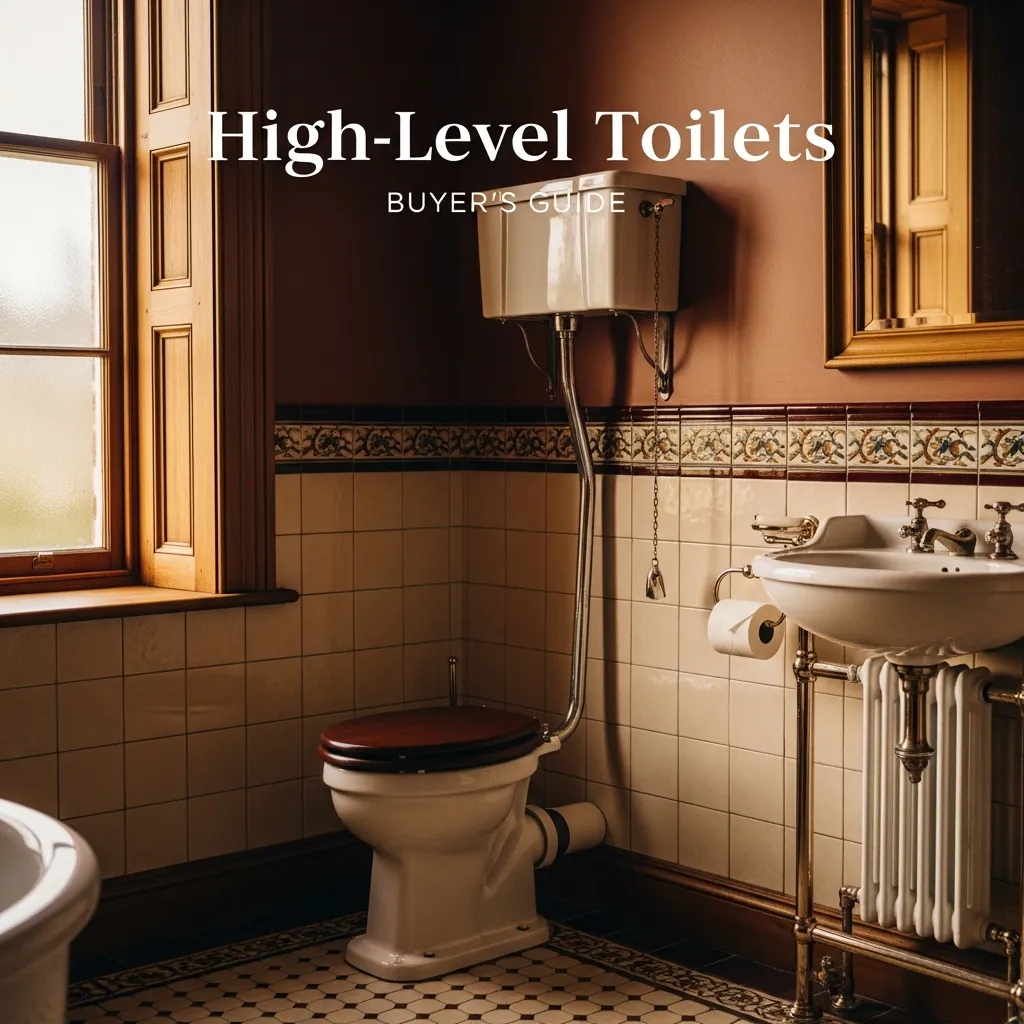
High-Level Toilets: A Buyer's Guide for Period Bathrooms
The high-level toilet, with its raised cistern and pull-chain flush toilet mechanism, is one of the most recognisable features in a true Victorian toilet design — the kind of fixture that defines an authentic Victorian or Edwardian bathroom. This design quickly signals period authenticity in a way few other Victorian bathroom fixtures can, but it also carries a common myth.
Many people restoring a period bathroom think that picking a high-level toilet means giving up the stability and function of a standard close-coupled model. This guide will clear up that idea, explaining how high-level cistern toilet designs work, what to consider when buying one, the available materials and finishes, and how to balance authenticity with everyday use.
What Is a High-Level Toilet?
Defining the Design
A high-level toilet consists of a cistern mounted well above the pan, typically close to the ceiling or high on the wall, connected to the pan below by a length of flush pipe. The flush is triggered by pulling a chain, rather than pressing a button or lever mounted directly on a low cistern—a genuine chrome pull-chain toilet remains one of the most requested finishes for this style.
How It Differs from a Close-Coupled Toilet
A modern close-coupled toilet has the cistern sitting right on top of the pan, forming a single, compact unit. In contrast, a high-level toilet keeps these parts separate, both in appearance and function, which creates its unique period look. Understanding close-coupled vs high-level toilet differences is often the first thing buyers need clarified before choosing a toilet pan period style to match.
Why This Became the Victorian and Edwardian Standard
This raised design was the standard for Edwardian bathroom toilet installations, as well as Victorian ones, before improvements in cistern engineering allowed for the more compact close-coupled style. Back then, it was not about style; it was just the way toilets were made.
Common Terms to Know
When looking into these toilets, you'll see a few common terms. "High-level" means the raised cistern design discussed here. "Close-coupled" is the modern, compact style. "Low-level" describes a cistern set closer to the pan but still separate, offering a middle option between the two.
The History Behind the High-Level Design
Origins in Victorian Plumbing Engineering
The high-level cistern design emerged directly from the gravity-fed flush systems available to Victorian engineers, and remains a fascinating chapter in Victorian plumbing history. Positioning the cistern high above the pan allowed water to build sufficient pressure through gravity alone as it fell, delivering an effective flush without any of the pump or pressure-assist mechanisms that modern toilets rely on.
A Functional Necessity, Not a Style Choice
It's worth understanding that this elevated positioning was originally a genuine engineering requirement, not a decorative decision. The height was precisely what made the Victorian toilet mechanism actually work reliably given the plumbing technology of the era.
How the Aesthetic Grew Inseparable from Period Character
As plumbing technology improved and close-coupled toilets became standard, the high-level style stayed linked to Victorian and Edwardian bathrooms. Today, people choose it mainly for its period look, even though the original engineering reason is no longer needed.
How Modern High-Level Toilets Perform
Addressing the Reliability Myth
A common myth is that picking a period-style toilet means you have to accept lower performance. In fact, modern high-level toilets are built to today's standards, with traditional looks on the outside and up-to-date mechanisms inside.
Modern Flush Mechanisms Inside Traditional Cisterns
Most high-level cistern toilet units today use modern flush valve technology, so you get the reliable and consistent flush you'd expect from any new toilet. At the same time, they keep the raised cistern and pull-chain that give the classic period appearance.
Water Efficiency
Many modern high-level toilets include a dual flush period-style mechanism inside their traditional-looking cisterns. This means you can meet today's water efficiency standards without giving up the classic period style.
Noise and Maintenance Versus Genuine Antiques
Modern reproductions usually work much better than true antiques when it comes to noise and maintenance. Old cisterns and mechanisms often show their age, while a well-made modern version avoids these problems.
What to Look for When Buying a High-Level Toilet
Cistern Material Options
Cast iron toilet cistern units have the real weight and look of the period, while a ceramic high-level cistern is lighter and often more affordable, but still fits the style. Your choice depends on your budget and the look you want.
Pan Style and Shape
Some buyers prioritise a strictly period-accurate pan profile. In contrast, others prefer a modern-comfort pan shape paired with the traditional high-level cistern above it — an integrated approach that delivers period visual character with contemporary everyday comfort.
Flush Pipe and Chain Finish
The connecting brass flush pipe toilet fitting, along with the pull chain and handle, come in a range of finishes — chrome, brass, and nickel among the most common — and this choice should be made in coordination with the rest of the bathroom's brassware rather than in isolation. Getting period bathroom brassware matching right at this stage saves having to rework fittings later.
Warranties and Spare Parts
Since a high-level toilet has more visible moving parts than a standard model, check the manufacturer's warranty and make sure toilet cistern spare parts will be available in the future. This matters for a fixture you want to last for many years.
Genuine Antique vs Reproduction High-Level Toilets
Sourcing a Genuine Antique
Antique cisterns and pans can be sourced through reclamation yards and specialist dealers as part of a wider antique sanitaryware sourcing process, offering the most authentic option available for a restoration project prioritising genuine period bathroom sanitaryware above all else.
Assessing Antique Condition
Any antique piece needs careful inspection before purchase: checking for cracks in the ceramic, wear or crazing in the glaze, and confirming that the internal flush mechanism actually still functions reliably, since replacement parts for genuinely antique mechanisms can be difficult to source.
Heritage Reproduction Brands
For most people, a good heritage reproduction gives the best mix of authenticity and reliability. Not all heritage sanitaryware brands UK buyers encounter offer the same standard, though — quality can vary a lot between brands. The best reproductions use solid materials and mechanisms, while cheaper ones may look similar but feel flimsy.
Cost Comparison
Genuine antiques, high-end reproductions, and budget versions all sit at different points on the high-level toilet cost scale. Usually, quality, reliability, and how long they last match the price. Spending a bit more often leads to better long-term satisfaction.
Installation Considerations
Wall Mounting Requirements
The raised cistern must be securely mounted to the wall as part of any wall-mounted cistern toilet installation, especially if it's made of cast iron. It's important to check the wall structure before installation, as older homes can have very different wall types — a detail that shapes the wider high-level toilet installation process from the outset.
Pipe and Flush Mechanism Routing
The flush pipe and pull-chain must be installed in the right position for both proper function and to keep the authentic look. Good placement helps the toilet look original instead of awkward.
Working with Existing Pipework
If your home still has original period pipework in good shape, you might be able to use it. More often, new pipes are installed to modern standards, but they can still be arranged to match the period look.
Positioning Within the Bathroom
A high-level toilet looks best when it has space in the room, instead of being crowded by other fixtures. It's worth treating it as a feature, not just a basic piece to hide in a corner.
Choosing the Right Finish for Your Bathroom
Cistern and Pipe Finishes
Besides the material, the finish is important. Cast iron cisterns usually have a traditional painted finish. Ceramic and brass combinations or all-chrome fittings give you different levels of period style or a more modern look.
Matching Brassware
Choose the finish for the chain, handle, and lever to match the other metal fittings in your bathroom. If you have unlacquered brass, chrome, or nickel taps, use the same finish on the toilet hardware for a unified look.
Working with Other Period Fixtures
A high-level toilet looks best as part of a complete set of period bathroom restoration fixtures, not as a stand-alone feature. Matching its finish and style with the other Victorian terrace bathroom fixtures around it creates a more convincing and unified look.
Bringing Everything Together
A high-level toilet delivers genuine period character without the performance compromises many buyers assume come with the territory. Modern reproductions in particular offer contemporary flush reliability and water efficiency housed within an authentically styled cistern, making this one of the more approachable period fixture choices available — provided you take the time to choose quality materials and a reputable manufacturer.
If you're restoring a period bathroom and need expert advice on choosing and installing the right high-level toilet, contact us for a personalised consultation.
