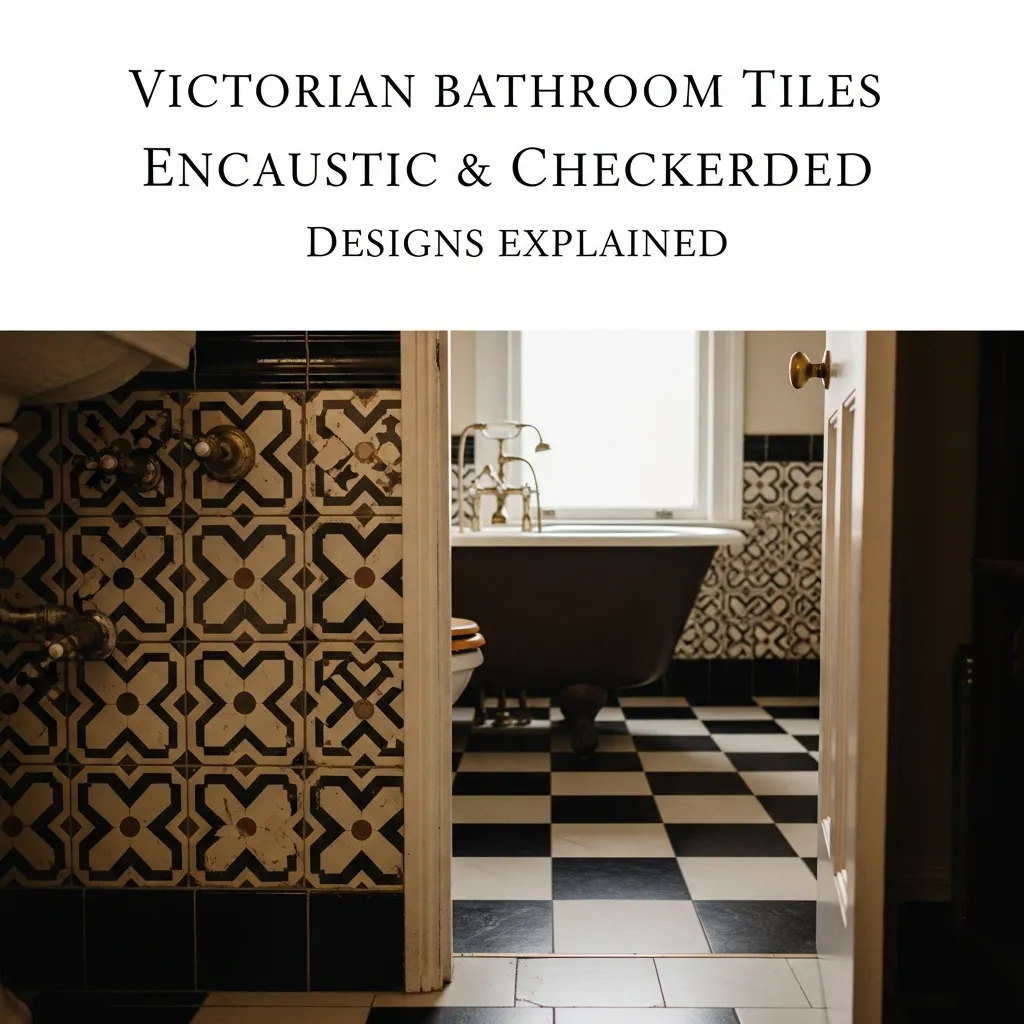
Victorian Bathroom Tiles: Encaustic and Checkerboard Designs Explained
Nothing says “Victorian bathroom” quite like an encaustic or checkerboard tiled floor. These patterns are easy to spot, even for those who aren’t interested in interior design. Just one photo of either style can make a room feel like it belongs in the 19th century, no matter what else is in the space.
People often talk about these two tiling styles together, and homeowners restoring a period bathroom sometimes use the terms interchangeably. However, they are truly different in their origins, how they are made, and how they look. It’s helpful to know what sets them apart before choosing one or a mix of both for your bathroom.
A Brief History of Victorian Bathroom Tiling
Why Tiling Became Central to Victorian Bathroom Design
As indoor plumbing and dedicated bathrooms became more common during the Victorian era, tiling became the practical solution to a new challenge: creating a surface that could handle constant moisture and still look refined. Tiles were more durable and hygienic than plaster or timber, and soon became a sign of both status and function.
The Rise of Mass-Produced Decorative Tiles
During the Victorian industrial era, new manufacturing methods made it possible to produce detailed decorative tiles on a larger scale and at lower cost. Tiles that were once only found in the grandest homes became available to many more homeowners.
From Grand Houses to Ordinary Terraces
This is how encaustic and checkerboard patterns ended up in ordinary London terraces, not just stately homes. As manufacturing costs dropped, decorative styles from grand entrance halls and public buildings made their way into everyday bathrooms. That’s why these patterns feel so closely linked to Victorian terrace houses today.
What Are Encaustic Tiles?
Defining Encaustic Tiles
The pattern on an encaustic tile is not printed on the surface. Instead, it is made by inlaying different colored clays into the tile during manufacturing. This is the main difference between a real encaustic tile and a modern printed copy.
How the Manufacturing Process Creates Durability
Since the colored pattern goes all the way through the tile instead of just sitting on top like a glaze or print, encaustic tiles keep their design even as the surface wears down over many years. The pattern does not fade or wear away like a printed design would.
Classic Victorian Motifs
Victorian encaustic tiles often featured geometric patterns, floral designs, and styles inspired by the Gothic Revival movement that influenced much of the era’s architecture and decorative arts. These patterns were usually combined into detailed borders and central medallions, especially in hallways and larger bathrooms.
Why the Pattern Doesn’t Wear Away
This strength is why so many original Victorian encaustic floors still exist today, more than a century after they were installed. Their patterns remain clear, even after generations of daily use, showing just how durable the manufacturing method is.
What Is the Checkerboard Pattern?
Defining the Classic Design
The checkerboard pattern is exactly what it sounds like: alternating tiles, traditionally black and white, laid in a repeating grid to create a bold, graphic floor design. Unlike encaustic tiling’s intricate, often ornamental patterning, checkerboard relies entirely on strong contrast and simple geometric repetition.
Origins in Grand Entrance Halls
Checkerboard flooring originated in grand Victorian entrance halls, where the bold pattern made an immediate visual statement to anyone entering the property. It later became a bathroom staple as the same principles of durability and visual impact translated naturally into this newer type of room.
Variations on the Classic
While black-and-white remains the archetypal combination, marble checkerboard brings genuine luxury texture to the pattern, softened grey-and-white variations offer a gentler, more contemporary take, and the choice between a diagonal or straight-set layout significantly changes how dynamic or formal the finished floor feels.
Why It Remains Enduringly Popular
Checkerboard floors have always stayed in style, mainly because their simple design gives them lasting appeal. Unlike more complex or trendy patterns, a well-made checkerboard floor looks just as fitting today as it did a hundred years ago.
Encaustic vs Checkerboard — Choosing the Right Pattern
Visual Impact Comparison
Encaustic tiles add a detailed, decorative touch to a room, offering real craftsmanship for those who look closely. Checkerboard patterns, on the other hand, make a strong and clear impression right away, standing out boldly from across the room.
Matching Pattern to Room and Property
Encaustic patterns work best in rooms where you want the floor to stand out as a main design feature, such as a period bathroom restored with careful attention to detail. Checkerboard is a good choice for spaces where you want a bold, timeless look without as much pattern complexity.
Combining Both
You don’t have to pick just one style. You can use an encaustic border around a checkerboard floor, or add an encaustic medallion in the center of a checkerboard pattern. Both are authentic combinations that blend the best of each tradition.
Coordinating the Wider Bathroom Scheme
No matter which pattern you choose, it should fit with your bathroom’s fixtures and color scheme. A busy encaustic floor usually looks best with simpler, more understated fittings. A checkerboard floor is more flexible and can work with both minimal and decorative fixtures.
Genuine Encaustic vs Modern Reproduction Tiles
Traditional Cement Encaustic Tiles
Genuine cement-based encaustic tiles are relatively porous compared to modern porcelain, which means they require proper sealing both at installation and periodically thereafter to protect the surface from staining and moisture damage.
Porcelain Reproduction Tiles
Modern porcelain tiles can replicate the encaustic look remarkably closely through high-quality printing techniques, and offer considerably better durability and lower maintenance than genuine cement tiles, without requiring the same sealing regime.
Cost Comparison
Genuine cement encaustic tiles typically command a meaningful premium over porcelain reproductions, both in material cost and in the more specialist installation and sealing process they require.
When Authenticity Matters Most
For listed buildings or properties within a conservation area, genuine period-appropriate materials may be specifically expected or required as part of any restoration work. For most other properties, a high-quality porcelain reproduction delivers the same visual impact with considerably less ongoing maintenance, making it the more sensible choice for the vast majority of London bathroom renovations.
Practical Installation Considerations
Sealing Requirements
Genuine cement and encaustic tiles need to be properly sealed before grouting and periodically after installation to protect the porous surface from staining. This step doesn’t apply to porcelain alternatives.
Grout Colour Selection
The colour of the grout used has a significant impact on how clearly the pattern reads once installed — too dark a grout against light tiles can visually fragment the pattern. At the same time, too light a grout against dark tiles can wash out the contrast the design depends on.
Underfloor Heating Compatibility
Both genuine encaustic and porcelain reproduction tiles are generally compatible with underfloor heating. However, genuine cement tiles benefit from a more gradual heat-up process to avoid thermal stress on the more porous material.
Long-Term Maintenance
Keeping either pattern looking sharp over the years comes down to appropriate cleaning products (avoiding harsh acidic cleaners on genuine cement tiles in particular) and, for authentic encaustic installations, keeping the sealing schedule to protect the surface.
Bringing It Entirely
Encaustic and checkerboard tiles are two different but equally classic styles of Victorian bathroom design. One is detailed and decorative, while the other is bold and simple. Both are great choices for restoring a period bathroom in London. Whether you pick one, the other, or a mix of both, your main decisions are matching the pattern to your room and property, and choosing between original materials or high-quality reproductions based on your needs and how much maintenance you want to do.
If you are planning to restore a period bathroom and need expert advice on choosing and installing the right tile pattern for your home, contact us for a personalized consultation.
