Ventilation Options for Period Bathrooms Without Extractor Fans
Every bathroom needs somewhere for moisture to go. That’s non-negotiable. But a lot of homeowners restoring a period property understandably don’t want a plastic extractor grille interrupting a carefully restored ceiling or a beautifully plastered wall. It feels like exactly the kind of modern intrusion a period renovation is meant to avoid.
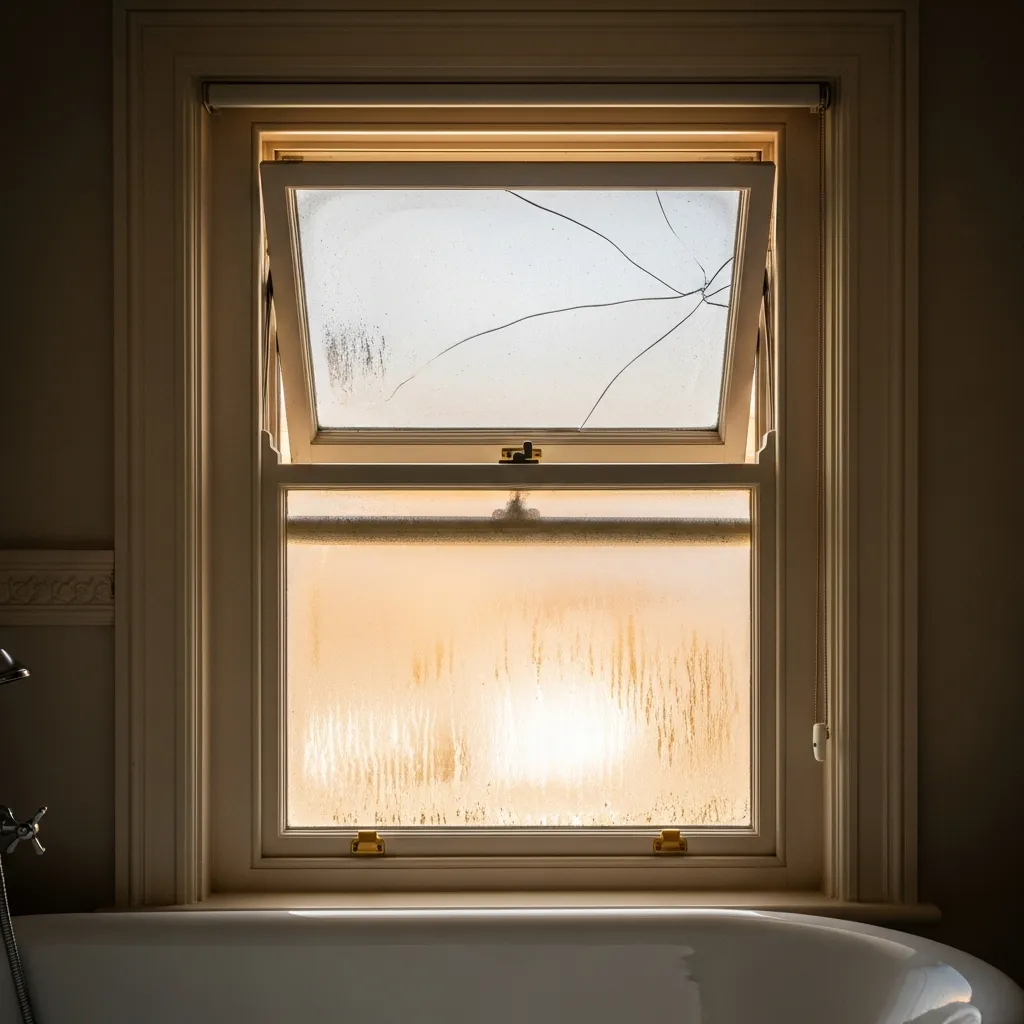
Here’s the thing though — many Victorian and Edwardian bathrooms already have a genuine ventilation solution built in, sitting right there in the authentic sash window. It just needs the right glazing for privacy, and a bit of thought about how you actually use it, to do its job properly. This guide covers how to make that work, what to do about the privacy problem it creates, when building regs mean you can’t rely on a window alone, and how to combine natural and mechanical ventilation without wrecking the room’s character.
Why Bathroom Ventilation Matters More Than People Think
Poor ventilation isn’t just an inconvenience — it’s a genuine risk to the room and everything in it. Condensation builds on cold surfaces, damp creeps into plaster and timber, and mould follows not far behind if nothing’s done about it.
Period properties are particularly vulnerable here. Solid walls don’t manage moisture the way modern cavity construction does, original plaster and joinery are more sensitive to sustained damp than contemporary materials, and many period bathrooms were converted from box rooms with limited existing airflow to begin with.
The instinct is usually to reach straight for an extractor fan. It’s the standard modern answer, and often the right one — but it’s not the only one, and it’s not always the best fit for a room you’ve spent real money and care restoring.
Using the Original Sash Window for Ventilation
How It Actually Works
A working sash window opens at both top and bottom, and that’s genuinely clever design — warm, moist air rises and escapes through the top gap, while cooler air is drawn in at the bottom. It creates proper natural airflow through the room, not just a token gap for show.
The Original Victorian Solution
This is worth remembering: sash windows were the ventilation solution long before extractor fans existed. Victorian builders weren’t ignoring the moisture problem — they were solving it with the technology available, and it worked reasonably well.
Restoring a Stiff or Painted-Shut Sash
The trouble is, plenty of original sash windows have been painted shut, draught-proofed into immobility, or left stiff and unused for decades. Getting one working again properly is usually a straightforward job for a sash window specialist — freeing the sashes, replacing worn cords, and making sure it opens smoothly at both top and bottom.
Using It Day to Day
In practice, this means leaving the window cracked on the latch for general background airflow, and opening it fully after a shower or bath to clear the worst of the steam quickly. It’s a habit more than anything technical.
Solving the Privacy Problem
Why Clear Glass Doesn’t Work
Obviously, standard clear glass isn’t going to cut it in a bathroom. The window needs to let light in while keeping the room private — and that’s where period-appropriate obscure glass comes in.
Acid-Etched, Sandblasted, and Reeded Glass
These are the classic period-correct options. Acid-etched and sandblasted glass both give a soft, even obscuring effect. In contrast, reeded glass — with its fine vertical ridges — has a genuinely traditional look that suits Victorian and Edwardian properties particularly well.
Film-Based Solutions
Where you want to keep the existing glass exactly as it is, a privacy film can be applied over the top rather than replacing the pane entirely. It’s a good option if the authentic glass itself is part of what you’re trying to preserve.
Keeping the Room Bright
None of these options should leave the room feeling gloomy. A carefully selected obscure glass still lets through plenty of light — it just diffuses it, rather than giving anyone outside a clear view in.
When Ventilation Alone Isn’t Enough
Building Regulations
UK building regs set out minimum ventilation requirements for bathrooms, and in some situations, a window on its own — however well it opens — won’t satisfy them.
Where This Applies
Windowless bathrooms, loft ensuites without external walls, and bathrooms converted from genuinely internal rooms all fall into this category. If there’s no external wall for a window at all, mechanical extraction isn’t optional.
Why It’s Non-Negotiable Here
In these cases, ventilation isn’t really a style choice anymore — it’s a legal requirement, and one worth taking seriously given the genuine damage poor ventilation can do over time.
Discreet Mechanical Extraction Options
Low-Profile, Period-Sympathetic Designs
Extractor fans have come a long way. Slim, low-profile units are far less visually intrusive than the bulky grilles most people picture, and some are specifically designed to sit unobtrusively against a period ceiling.
Positioning for Minimal Visual Impact
Careful positioning — tucked into a corner, or above a door rather than centre-ceiling — reduces how much the fan draws the eye, without impairing how well it works.
In-Line or Ducted Fans
These remove the fan unit itself from the bathroom entirely, ducting air out through a much smaller, less visible grille. It’s a genuinely good option where keeping the room’s original ceiling as clean as possible matters.
Humidity-Sensor Fans
Rather than running constantly or needing to be switched on manually, humidity-sensor fans only kick in when moisture levels actually rise — quieter day-to-day, and only doing the work when it’s actually needed.
Combining Natural and Mechanical Ventilation
Why Both, Usually
For most period bathrooms, the best answer isn’t window or fan — it’s both, working together. The sash window manages everyday background airflow, and a discreet mechanical fan backs it up for the high-moisture moments a window alone can’t fully manage.
Planning It Properly
This needs to be decided early, ideally before tiling or panelling goes in. Retrofitting ducting or a fan after the room’s finished is far more disruptive than planning it in from the start.
Protecting the Room from Long-Term Moisture Damage
Warning Signs
Condensation regularly forming on the window, paint starting to peel, or a musty smell that doesn’t clear — all worth taking seriously as early signs that ventilation isn’t quite doing enough.
The Cost of Ignoring It
Left unaddressed, poor ventilation doesn’t just cause cosmetic issues — it accelerates real damage to original features. Sash windows, panelling, and plasterwork all suffer faster in a consistently damp environment.
Simple Habits That Help
Beyond the ventilation setup itself, small daily habits genuinely help — wiping down wet surfaces after a shower, keeping the window cracked overnight in warmer months, and not leaving wet towels bunched up against a wall.
Bringing Everything Together
A working original sash window, fitted with the right privacy glass, does more genuine ventilation work than most people expect. But it’s not a complete substitute for mechanical extraction where building regs require it, or in genuinely windowless spaces. The best technique in most period bathrooms is a considered mix of both — natural airflow for everyday use, discreet mechanical backup for when it’s really needed.
If you’re planning a bathroom renovation and want a ventilation plan that protects both the room and its original features, get in touch for a tailored consultation.
