The Importance of Water Pressure: Navigating London’s Low-Pressure Issues with Unvented Systems (Megaflo)
A beautifully specified luxury shower is only as good as the water pressure actually behind it. It’s a genuinely common problem in London — a homeowner invests in a stunning rainfall shower or digital system, only to find the pressure isn’t there to make it perform the way it’s supposed to. This guide explains why so many London properties struggle with pressure, how unvented systems like Megaflo solve it, and what’s actually involved in fitting one.
Why London Properties Often Have Low Water Pressure
Plenty of Victorian and Edwardian homes still rely on gravity-fed hot water systems, where pressure depends entirely on how high the cold water tank sits above the outlet — often not very high at all in a typical London terrace. Older pipework, sized for far more modest demands than a modern household places on it, compounds the problem further. And multiple outlets running at once — a rainfall shower, body jets, a double basin — overwhelm a supply that was never designed for that kind of simultaneous demand.
What Is an Unvented System?
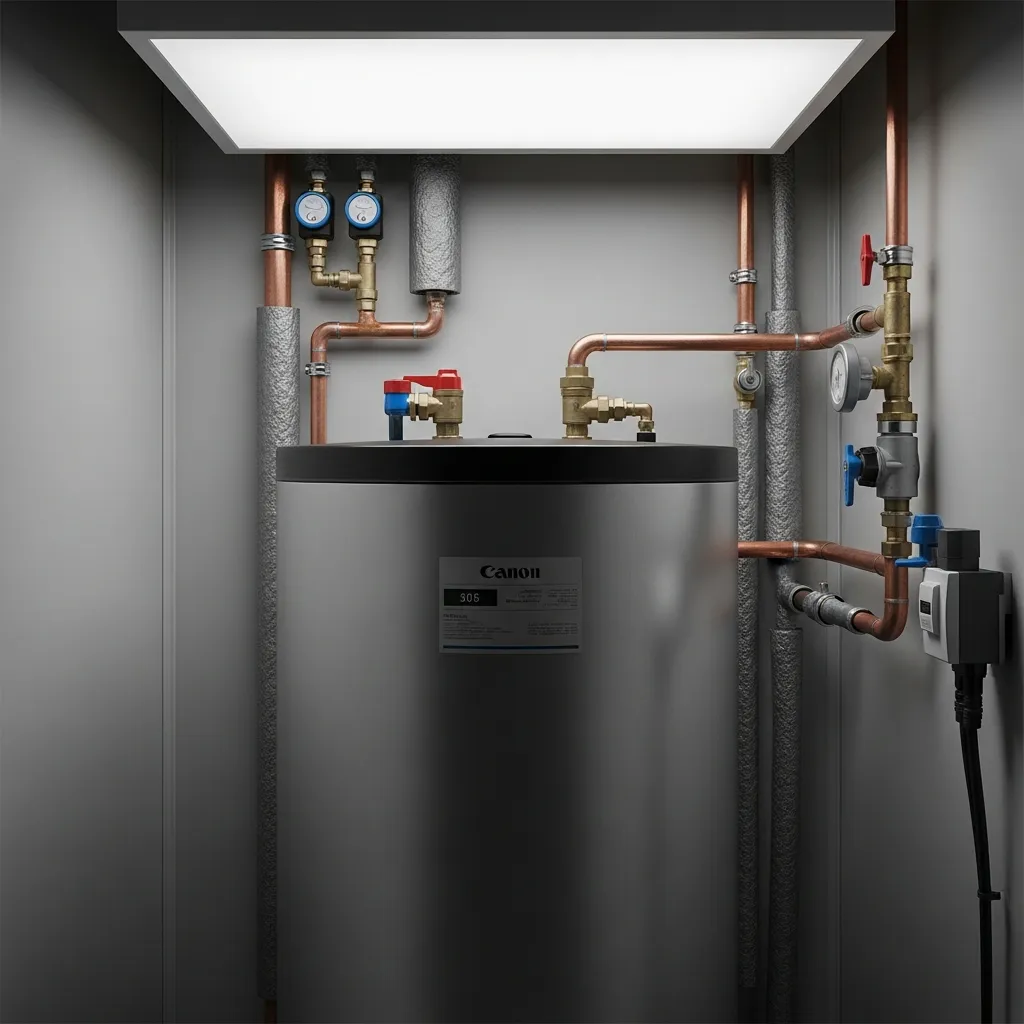
An unvented cylinder, Megaflo being the best-known brand, draws water directly from the mains rather than relying on gravity from a loft tank. This delivers consistently strong, mains-equivalent pressure regardless of where the cylinder actually sits in the house — a fundamentally different approach to the traditional gravity-fed setup most older London properties started with.
Gravity-Fed vs Unvented — A Direct Comparison
Unvented systems deliver far more consistent pressure and performance, particularly where multiple outlets need running at once. They also remove the need for a loft tank entirely, freeing up that space, though installation is more involved and comes with specific regulatory requirements gravity-fed systems don’t. For luxury features — digital showers, rainfall heads, multiple simultaneous outlets — an unvented system is, in practice, close to indispensable.
Installation Considerations for Period Properties
The cylinder itself needs a reasonable amount of space, though considerably less than a loft tank system once you factor in the tank’s removal. Mains supply capacity needs checking before installation to confirm it can properly support an unvented system. Unvented systems also require G3 certification and specific Building Regulations compliance — not something to leave to an unqualified installer. Depending on the property’s existing pipework, either partial reuse or full replacement may be needed to get the most out of the new system.
Cost and Real Benefits
Installation costs more upfront than a standard gravity-fed setup. Still, the long-term benefit — consistent pressure across multiple bathrooms running simultaneously — is exactly what makes genuinely high-spec bathroom features actually work as intended, rather than looking impressive but underperforming day to day.
Bringing It All As One
Solving London’s common low-pressure problem with an unvented system like Megaflo is often the real difference between a luxury bathroom that looks the part in photos and one that actually performs like it every single morning. If you’re investing in a high-spec shower or bathroom, it’s worth checking your water pressure setup before, not after, the tiling goes in.
If you’re not sure whether an unvented system is right for your property, get in touch for a consultation.
